Rbx Clothes Maker: Skin Editor
- 4.6
- Rating
- 5.00M
- Installs
- Free
- Price
 Analysis by App-foxy
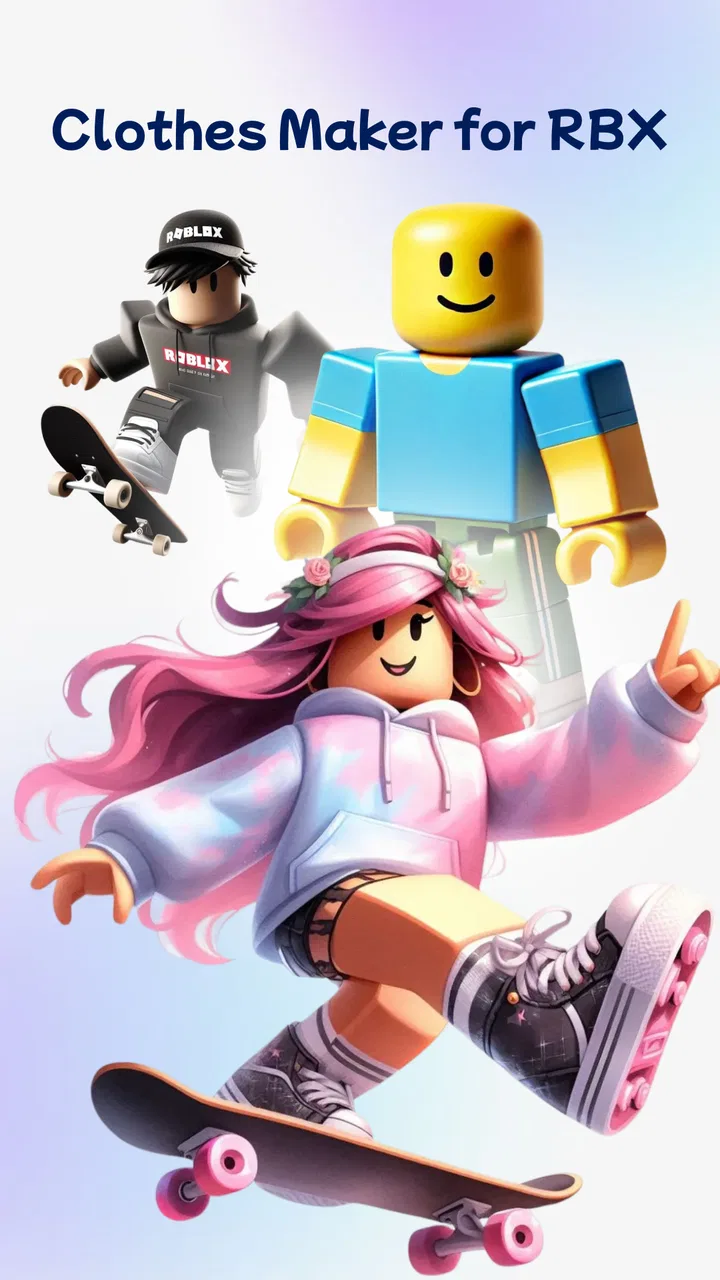
Rbx Clothes Maker: Skin Editor is a free productivity app from 89 games that I found most useful when I wanted to plan a Roblox-style outfit without committing to the first idea that came to mind. Its purpose is straightforward: create and customize skins, outfits, and clothes in one focused workspace. That makes it different from a general drawing app, because the whole experience is aimed at clothing and avatar appearance rather than open-ended illustration.
I approached it less like a game and more like a small design tool. The appeal is immediate for anyone who enjoys coordinating colors, changing clothing concepts, or preparing several looks for different moods. It is also approachable for younger users because its content rating is Everyone. At the same time, I would not describe it as a complete replacement for a full graphics editor or a professional clothing-production workflow. Its value is in quick experimentation and accessible outfit planning.
How the editor feels to use in everyday situations
I find this kind of editor easiest to judge in the small gaps of a normal day: a quick outfit idea before class, or a few minutes comparing colors while relaxing at home. In this section, I focus on how to keep those sessions purposeful rather than letting every new option become another round of tweaking. A simple stopping point can make the difference between a fun creative habit and a screen session that feels unfinished.
You May Also Like

 Blood Strike: 2.5 Anniversary
Blood Strike’s Loadouts Turn Every Drop Into a Tactical Gamble
A close look at Blood Strike’s custom loadouts: how fast access to signature weapons reshapes its battle royale rhythm, rewards preparation, and narrows the gap between fights.

 Pandora - Music & Podcasts
Pandora’s Music Is Easy to Start, but Harder to Recover
Pandora’s strength is its low-effort path from a seed to a station. Its weak spot is how much confidence it asks you to place in connection, setup, and quiet recovery.

 8 Ball Pool
 Is Built on Rivalries, Rematches, and Routine
A close look at the rivalries, rematches, shared routines, and unanswered safety questions that turn a quick pool match into a persistent mobile community.

 Samsung Music
’s Quiet Strength Is Playing What You Already Own
Its reach comes less from spectacle than from dependable access to a personal library. That simplicity is both the app’s strongest retention engine and its ceiling.

 AccuWeather: Weather Radar
AccuWeather Review: A Quick, Clear Forecast for Everyday Decisions
For everyday plans, the best forecast is the one you can understand quickly. AccuWeather makes rain timing, radar, and local conditions easy to act on, with a few trade-offs.

 Hill Climb Racing
Why Hill Climb Racing Still Turns Crashes Into One More Run
A tiny car, a bumpy hill and one more upgrade: Hill Climb Racing keeps resurfacing because its simple chaos makes every near-miss feel personal.
More From Our News Desk



Readability and navigation matter more than decoration
The best thing about a focused editor such as this is that the task stays clear. Instead of opening a broad creative suite filled with unrelated tools, I can concentrate on the outfit itself. That narrower purpose reduces the mental load for a first-time user who simply wants to change a top, coordinate colors, or try a different skin idea.
In my experience, the most comfortable way to use it is to make one change at a time. I choose the clothing direction first, then adjust the visual details rather than trying to redesign everything at once. This approach makes it easier to notice whether a color works with the rest of the outfit and helps prevent accidental changes from becoming confusing.
That workflow is particularly helpful for users who prefer predictable navigation. An editor can become tiring when every screen presents too many choices, so I appreciate the value of keeping attention on the character and the clothing. The simple concept also makes it easier for a parent, friend, or teacher to explain the basic task: open the editor, create a look, refine it, and decide whether it feels right.
The app’s current version is 1.0.3, and I would treat it as a tool that benefits from a patient first session. Rather than expecting to understand every control immediately, I recommend spending a few minutes testing the available options before starting a final design. That small trial run is useful for anyone who reads slowly, prefers repetition, or needs time to understand how a visual editor responds.
One practical tip is to use a naming or planning habit outside the app if you are making several outfit concepts. I might write down a short idea such as “dark jacket with bright accent” before opening the editor. This is not a built-in feature I am claiming; it is simply a way to reduce decision fatigue when the creative choices start to multiply.
Motor and sensory considerations during editing
Outfit editing is generally less demanding than a fast action game because the user can focus on visual decisions instead of reacting to a moving opponent. That makes this type of app potentially more comfortable for people who prefer a calm, task-based activity. Someone using a phone with one hand may also find short editing sessions easier than a game that requires constant simultaneous controls.
Still, visual customization depends heavily on seeing differences between colors, shapes, and clothing details. Users with low vision, color-vision differences, or sensitivity to busy screens may need to enlarge the device display, increase system text size where the phone allows it, or work in a well-lit environment. Those adjustments come from the device rather than from a confirmed accessibility mode inside the app, so I would test the editor personally before relying on it for a child or adult with specific access needs.
Color selection deserves special attention. A design that looks distinct to one person may appear too similar to another, especially when the only difference is a small shade change. I found it more reliable to judge an outfit by overall contrast and silhouette instead of depending on subtle color variations alone. Stronger contrast between clothing areas can make a design easier to recognize and more satisfying to review.
For users who experience visual fatigue, I would avoid trying to complete a large collection in one sitting. A useful routine is to make one outfit, pause, and inspect it again after a short break. This helps reveal whether the design is genuinely balanced or merely seems exciting after staring at the same screen for too long.
Motor access can vary widely. Tapping small controls, dragging across a clothing area, or repeatedly correcting a selection may be comfortable for one person and frustrating for another. I would use a stable surface, keep the phone at a comfortable angle, and make deliberate movements rather than rushing. If a user relies on a stylus or other input aid, the best approach is to test whether the app responds comfortably before planning a detailed project.
Situational access: when the app fits real life
A realistic everyday use case would be a student preparing an avatar concept during a short break. They may have only a few minutes, want to try a new clothing combination, and prefer not to learn a complicated design program. This app suits that moment because the goal is narrow and creative. The user can explore an idea without needing a long tutorial or a separate drawing workflow.
It can also work well as a shared activity. A parent and child could compare two outfit ideas, while a friend group could use it to brainstorm coordinated looks before choosing a favorite. In those situations, the app becomes less about technical precision and more about communication: one person describes a style, another adjusts it, and both can react to the result.
I also see value for users who need a low-pressure creative outlet. Someone who feels intimidated by professional illustration software may be more willing to experiment with clothing than with a blank canvas. The fixed subject gives the activity a starting point, which can be helpful for people who struggle with open-ended tasks or who want a clear boundary around their creative session.
Because it is free, the barrier to trying it is low. The app has reached over five million installs and holds a 4.7 average from around thirty-three thousand ratings, so it has clearly attracted a substantial audience. Those figures do not tell me whether it will suit every user, but they do suggest that the basic idea is easy for many people to understand and worth testing if outfit customization is already part of your interests.
Its age rating of Everyone also makes it easier to consider in family settings. I would still supervise younger users according to the normal rules for any mobile app, especially when a device is shared, but the rating itself makes the creative purpose feel more approachable than an app built around mature themes or competitive pressure.
Where it may create friction
The biggest limitation is the narrowness that makes the app approachable. If you want detailed illustration, advanced layer control, precise garment construction, or a broader design canvas, a dedicated graphics editor will probably give you more control. Rbx Clothes Maker: Skin Editor is better understood as a focused outfit-making tool than as a complete art studio.
I would also be cautious about expecting a finished, professional asset from a quick mobile session. The app is strongest when I use it to explore a concept, compare clothing directions, or make a look that feels personal. It is less suitable when the goal is exact production work that depends on fine technical adjustments and a carefully managed export process.
Another possible barrier is the difference between “easy to start” and “easy to master.” A beginner can understand the general purpose quickly, but creating a look that feels intentional still requires patience. The first result may look ordinary if I simply choose the most obvious options. Better results come from making small changes, stepping back, and checking whether the outfit has a clear focal point.
Users who depend on strong screen-reader support, voice navigation, special color modes, or highly adjustable controls should test the app in their own setup rather than assume that a simple interface automatically means full accessibility. A clean visual layout can reduce clutter, but it does not answer every access need. This is especially important when the user has to distinguish small controls or visually compare clothing details.
There is also a situational limitation for people with limited connectivity, restricted device storage, or strict screen-time routines. I would check how the app behaves on the intended device and plan short sessions if the user is sensitive to prolonged phone use. I am not treating these as confirmed app defects; they are practical conditions that can affect whether any mobile creative tool feels comfortable in daily life.
How it compares with the usual alternatives
Compared with a general drawing app, this editor offers a clearer starting point. A blank canvas gives more freedom, but it also asks the user to build the subject, proportions, and clothing structure from scratch. Here, the attention stays on the outfit concept, which is a real advantage for children, casual creators, and anyone who wants a result without learning a large toolset.
Compared with browsing ready-made outfit ideas, the app gives me more ownership. Looking at examples can be inspiring, but it can also encourage copying or leave me with no practical way to test a variation. Creating the look myself makes it easier to try an unusual color relationship or a different clothing balance.
On the other hand, a full design application remains the better choice for users who need precision, extensive editing control, or a workflow that extends beyond avatar clothing. I would choose this app for speed and approachability, then move to a more advanced tool when the project required detailed artwork rather than a quick wearable concept.
The developer, 89 games, has positioned the product around a very specific creative task rather than a broad productivity suite. That focus is why I can recommend it to someone who wants outfit experimentation without unnecessary complexity. It is also why I would not recommend it to a user whose main goal is photo editing, general illustration, or professional garment design.
Small workflow choices that improve the experience
My first useful habit is to begin with a theme instead of random selections. A theme might be a soft everyday look, a high-contrast style, or a color combination built around one favorite shade. This gives the editing session direction and makes the final result easier to judge. Without that anchor, it is easy to keep changing items simply because the app makes experimentation tempting.
My second tip is to check the outfit at a distance. After making several changes, I would put the phone down briefly or view the character from farther away. Small details that seemed important up close may disappear, while an awkward overall balance becomes easier to notice. This is especially useful for users who have trouble processing crowded visual information.
My third suggestion is to create variations rather than endlessly correcting one design. If I am unsure whether a bright accent works, I would make one version with it and another without it. Comparing two clear alternatives is often easier than repeatedly adjusting the same outfit and forgetting what the original looked like.
A fourth practical insight is to design for recognition, not only novelty. An outfit can be unusual and still feel coherent if one element acts as the visual signature. That might be a strong color contrast or a distinctive clothing combination. Keeping one recognizable idea helps the result remain readable for users who find many simultaneous details overwhelming.
These habits do not add hidden functions to the app; they make better use of its central strength, which is quick visual experimentation. They also make the experience more inclusive because they reduce the need for speed, perfect color perception, or a long uninterrupted session.
Who should try it, and who should skip it
I would recommend it to Roblox-style avatar fans, younger creators, casual designers, and families looking for a simple clothing-focused activity. It is especially appealing if you enjoy trying several looks before settling on one, or if professional design software feels excessive for the task.
I would also suggest it to people who prefer visual learning. The subject is concrete: you are working toward an outfit rather than learning an abstract productivity system. That can make experimentation feel rewarding even when the user has little previous design experience.
I would skip it if your priority is advanced graphic control, detailed technical clothing design, or a fully adaptable interface for a specific accessibility setup. In those cases, a more established graphics tool may be a better investment of time, even if its learning curve is steeper. I would also avoid choosing it solely because it is popular; the right question is whether a focused outfit editor matches your actual goal.
The app is free, and its broad audience makes trying it relatively easy. Its release date was March 10, 2026, so I would keep expectations realistic about how quickly its workflow may evolve. For now, I judge it by what it does well today: giving users a direct place to explore skins, clothes, and outfit combinations without turning the process into a technical project.
My inclusive verdict
After using it as a focused creative tool, I see Rbx Clothes Maker: Skin Editor as a friendly option for outfit experimentation rather than a universal design solution. Its clear purpose can support users who want a manageable activity, a quick visual result, or a shared project with friends and family. The Everyone rating and free access make it easy to consider, while its strong audience response adds some confidence that the basic experience connects with many users.
Its inclusive value comes mainly from simplicity and flexibility of pace. I can work quickly, pause often, compare alternatives, or use it as a starting point before moving to another tool. Those choices help people with different attention spans and creative confidence levels. However, users with specific visual, motor, or assistive-technology needs should test it directly, because a focused interface is not the same as comprehensive accessibility support.
My final recommendation is positive but specific: choose it when you want to make and refine avatar clothing ideas in a relaxed mobile setting. Do not choose it expecting professional illustration controls or guaranteed suitability for every access requirement. Used within its proper scope, it is an approachable productivity app that turns outfit planning into a simple, repeatable creative routine.
FAQs for Rbx Clothes Maker: Skin Editor
01What is Rbx Clothes Maker: Skin Editor used for?
Rbx Clothes Maker: Skin Editor is an app designed for users who want to create and customize clothing for avatars in the popular online game platform, Roblox. With an array of tools and features, it allows users to design unique outfits, ensuring their avatars stand out in the community. Whether you're a seasoned designer or a beginner, the app provides an intuitive way to express your creativity.
02Is Rbx Clothes Maker: Skin Editor free to use?
The app is free to download and offers a variety of basic tools for designing and editing clothing. However, it may have in-app purchases or premium features that provide additional capabilities and advanced design options. Users should check the app store listing for specific details about pricing and available upgrades.
03What features does Rbx Clothes Maker: Skin Editor offer?
Rbx Clothes Maker: Skin Editor offers a comprehensive set of features including a color palette, pattern designs, and various editing tools to help users create unique clothing pieces. Users can also save, export, and share their designs directly to Roblox, making the process seamless and efficient for game integration.
04Is Rbx Clothes Maker: Skin Editor suitable for beginners?
Yes, the app is designed to be user-friendly, catering to both beginners and experienced designers. It includes tutorials and guides that walk users through the design process, ensuring that anyone can start creating custom clothing without prior experience. The intuitive interface makes it accessible for all skill levels.
05How can I share my designs from Rbx Clothes Maker: Skin Editor to Roblox?
Once you've completed your design, the app provides options to export and upload your creations directly to Roblox. This process typically involves saving your design in the appropriate format and using Roblox Studio or the website to upload it. Detailed instructions are available within the app to assist users in sharing their work efficiently.
Pros
- Easy-to-use interface for beginners.
- Wide range of customization options.
- High-quality output designs.
- Regular updates with new features.
- Supports seamless sharing to platforms.
Cons
- Limited free version features.
- Occasional ads can interrupt workflow.
- Requires stable internet connection.
- Some tools may be confusing initially.
- In-app purchases can be pricey.

Rbx Clothes Maker: Skin Editor
Gallery